Why More Founders Prefer a Registered Company
Choosing to set up a company in India adds trust and professionalism. Customers rely more on registered companies. Suppliers offer better support. Banks take the business seriously. A private limited company becomes a separate legal entity with the power to own assets, hire employees, sign contracts, and scale without risking the personal assets of founders. This structure supports fundraising and clean financial operations
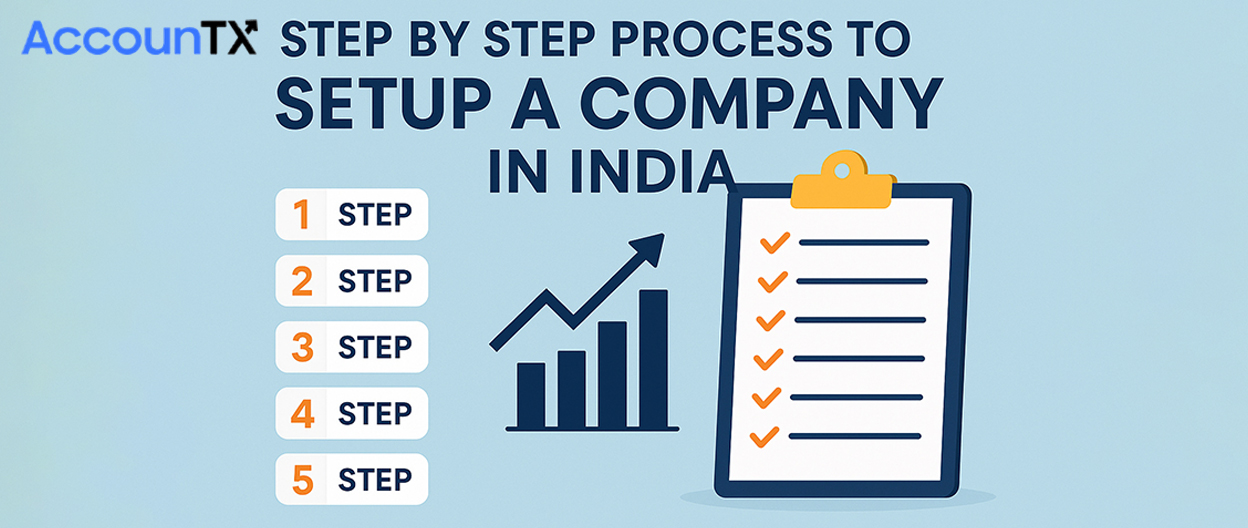
Step 1 Get the Digital Signature Certificate
The first step in the process to set up a company in India is obtaining a Digital Signature Certificate. Directors use the DSC to submit forms on the MCA portal. A Class three DSC works for all filings. Verification takes place through Aadhaar-based KYC or video identification. Ensuring that the DSC name and PAN name match helps avoid system errors during filing
Step 2: Obtain Director Identification Number
A Director Identification Number is mandatory for every director. The SPICe Plus system now allows founders to get DIN for up to three directors directly during incorporation. Completing the annual DIR 3 KYC keeps the DIN active and compliant within the MCA records
Step 3: Select a Name and Reserve It
Name selection is crucial for anyone planning to set up a company in India. The name must follow MCA naming rules, avoid trademark conflict, and stay unique. Founders can use SPICe Plus Part A to reserve the name early or proceed with name approval inside the main incorporation filing. A strong name should be simple, memorable and aligned with the business vision. You can either obtain prior approval of the proposed name or apply at the time of filing the incorporation documents.
Step 4: Prepare Founder and Business Documents
Accurate documentation speeds up approval. The documents usually needed include PAN and Aadhaar of directors, address proof, registered office proof, rent agreement, NOC from property owner, passport for foreign nationals, and draft object clauses. Clean and correctly formatted documents prevent delays caused by CRC queries
Step 5: Create the Memorandum and Articles of Association
The MoA and AoA define the identity and structure of the business. The MoA contains the object clauses that decide what the company is allowed to do. The AoA outlines operational rules and internal management. SPICe formats let founders create eMoA and eAoA in digital form without physical paperwork. Clear drafting keeps future expansion smooth and avoids amendment needs
Step 6: Fill SPICe Plus Part B
SPICe Plus Part B is the core of the incorporation process. It collects information about share capital, shareholders, directors, registered office and linked registrations. This stage also connects with AGILE PRO for GST, EPFO, and ESIC. Accurate entries here reduce resubmissions and help the file move through CRC smoothly.
Step 7: Upload Forms and Pay Government Fees
Founders sign all linked forms using their DSC and upload them through the MCA portal. Fees depend on authorised share capital and state stamp duty rules. Once submitted, the application moves to the Central Registration Centre, where officers verify document correctness and match all details with the Companies Act
Step 8: Receive the Certificate of Incorporation
After approval, the Certificate of Incorporation is issued along with CIN, PAN and TAN. This certificate confirms the legal existence of the company. The business can now open a current account, issue invoices, sign contracts and begin operations without restrictions
Step 9: Complete Mandatory Post-Incorporation Tasks
Once the certificate is issued, several tasks must be completed to make the company fully compliant. These include opening the current account, depositing initial share capital, filing INC 20A, issuing share certificates, maintaining statutory registers and applying for any industry-specific licenses. Completing these tasks early prevents penalties and keeps the company compliant from day one
Step 10: Maintain Annual Compliance Requirements
A private limited company must meet recurring compliance responsibilities. Anyone planning to set up a company in India must maintain a steady compliance rhythm. Annual tasks include director KYC, auditor appointment, AOC 4 filing, MGT 7 filing, board meetings and accurate bookkeeping. Clean compliance builds long-term credibility and supports future investment or loan requirements
Mistakes Founders Commonly Make During Incorporation
Common mistakes during incorporation include incorrect object clauses, outdated address proof, a mismatch between DSC and PAN details, unreadable PDF attachments, late INC 20A filing, and errors in capital structure. Avoiding these mistakes prevents unnecessary resubmissions and delays
How AccounTX Simplifies the Entire Process
Although the MCA system is digital, many founders still struggle with document formatting, form structure, and resubmission rules. AccounTX helps entrepreneurs by reviewing documents, recommending the best capital structure, preparing forms correctly, guiding name selection, and handling compliance tasks. This gives new businesses a smoother and faster way to set up a company in India without facing avoidable obstacles