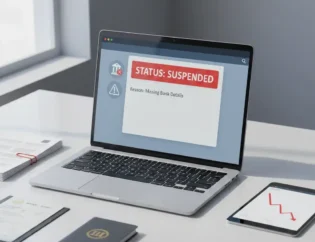

For startups operating across borders, banks and AD dealers function as the first line of enforcement under FEMA. Their scrutiny determines whether money moves smoothly or gets stuck, even when filings appear complete on paper.
The Invisible Gatekeepers of Cross Border Finance
Authorised Dealer banks are responsible for ensuring that every cross border transaction complies with FEMA and RBI directions. Unlike regulators, they do not review companies periodically. They review companies transaction by transaction.
Each remittance, guarantee, or capital movement triggers a review of historical compliance, governance behaviour, and financial consistency. This is why founders often hear the same response from banks: additional clarification required.
What feels like delay is often assessment.
What Banks Actually Review Before Approving Transactions
Banks do not look at individual filings in isolation. They look for patterns.
The first layer is APR behaviour. Banks track whether APRs are filed on time, whether financials are consistent year over year, and whether operational narratives match numbers. Late or inconsistent APRs signal weak governance, even if the delay was later rectified.
The second layer is remittance history. Banks review whether prior remittances aligned with approved purposes, whether end use was clearly documented, and whether reporting followed each transaction. Gaps here raise red flags immediately.
The third layer is guarantees and commitments. Guarantees issued to overseas subsidiaries are assessed not only for compliance but for proportionality. Banks evaluate whether guarantees align with the parent’s financial strength and past disclosures.
The fourth layer is governance discipline. Board approvals, shareholder resolutions, and internal documentation are checked for timing and consistency. Retroactive approvals are viewed as risk indicators.
None of this requires a regulatory notice. It is part of routine banking review.
Why Everything Can Be Filed Yet Nothing Moves
Founders often say all filings are done, but funds are still not released. This usually happens when filings exist but do not align.
Common triggers include mismatches between APR data and bank remittance records, differences between ODI registers and financial statements, inconsistencies between guarantees disclosed and guarantees invoked, or sudden changes in transaction patterns without prior narrative.
Banks are not looking for perfection. They are looking for coherence.
When coherence is missing, the safest response for the bank is to pause.
How This Silent Audit Shapes Real Outcomes
This invisible layer of scrutiny affects more than timelines. It affects credibility.
Companies that demonstrate consistent compliance behaviour find future approvals easier. Additional capital infusions move faster. Restructuring requests face fewer questions. Dividend repatriation encounters less friction.
Companies that treat compliance as episodic face compounding delays. Each transaction becomes a fresh justification exercise rather than a routine approval.
Over time, this affects operational flexibility and investor confidence.
What Founders Should Understand Early
Banks and AD dealers are not obstacles. They are risk filters.
Founders who understand this design their compliance systems accordingly. They focus not just on filing but on narrative continuity, documentation discipline, and alignment across years.
The silent audit never stops. The only choice is whether it works quietly in your favour or repeatedly slows you down.